
A new call for proposals has been published under the Farm Improvement Plans of Greece’s Common Agricultural Policy Strategic Plan (CAP Strategic Plan) 2023–2027, creating new funding opportunities for the modernisation of Greek agricultural holdings.
The call covers three interventions:
- Π3-73-2.1 – «Farm Improvement Plans Contributing to the Competitiveness of Agricultural Holdings»
- Π3-73-2.2 – «Investments in Agricultural Holdings Contributing to Water Savings»
- Π3-73-2.6 – «Circular Economy and Energy Investments in Agricultural Holdings».
The interventions aim, among other objectives, to strengthen the competitiveness of agricultural holdings, improve the efficient management of natural resources such as water, contribute to climate change mitigation and adaptation, and promote sustainable energy and the circular economy.
For farmers planning to invest in irrigation modernisation, precision agriculture and the use of real-time field data, the new call is particularly relevant.
€263,5 Million for the Modernisation of Agricultural Holdings
The total public expenditure available under the call amounts to:
€263.539.000
The programme is co-financed by the European Agricultural Fund for Rural Development (EAFRD), with available funds allocated across all Regions of Greece.
Indicatively, the largest allocations are directed to Central Macedonia (€49.23 million), Thessaly (€29.88 million), Eastern Macedonia and Thrace (€26.38 million), the Peloponnese (€24.11 million) and Western Macedonia (€21.94 million).
Who Is Eligible?
The interventions apply throughout Greece and provide support to agricultural holdings operated by individuals, legal entities and collective schemes, subject to the eligibility requirements and conditions set out in the call.
Water Saving at the Forefront
Intervention Π3-73-2.2 is particularly relevant to irrigated agricultural holdings, as it specifically targets investments that contribute to water savings.
The call links this intervention to sustainable development and the efficient management of natural resources, particularly water.
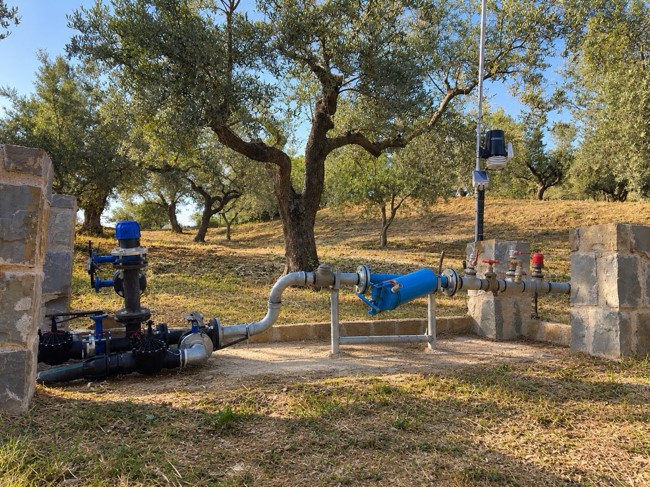
This creates an important opportunity to modernise irrigation infrastructure and move from irrigation decisions based primarily on experience towards irrigation management based on actual field data.
What Is Precision Irrigation?
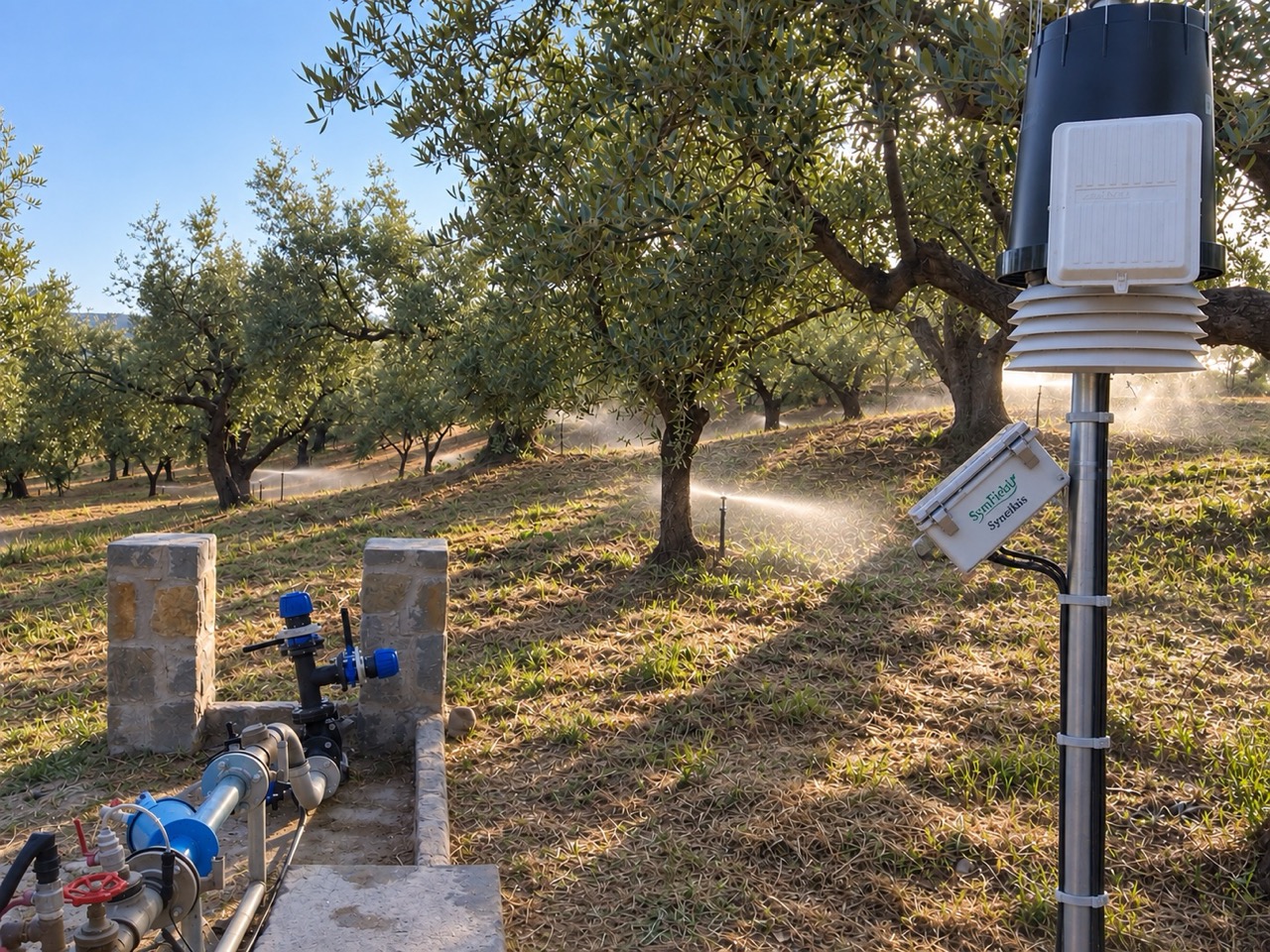
Precision Irrigation uses data from the soil, crops, microclimate and irrigation network to enable farmers to make better-informed decisions about when to irrigate and how much water to apply.
Depending on the installation, a modern system can use data such as:
- soil moisture, temperature and electrical conductivity,
- weather conditions,
- irrigation network pressure,
- water consumption and flow,
- irrigation water quality parameters,
- irrigation valve and irrigation zone status.
Importantly, the call explicitly refers to “Precision Irrigation” and, in the general case, requires an equipment installation study describing both the software used to process the recorded data and the automation systems controlled by that software.
This represents a significant shift towards a more measurable, automated and data-driven approach to irrigation management.
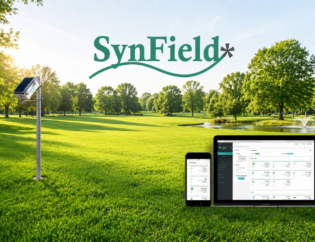
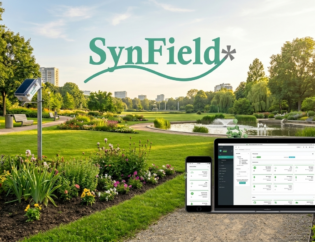
SynField: From Field Data to Precision Irrigation
At SYNELIXIS, we develop technologies that provide farmers and agronomists with a clearer understanding of what is actually happening in the field and across the irrigation network.
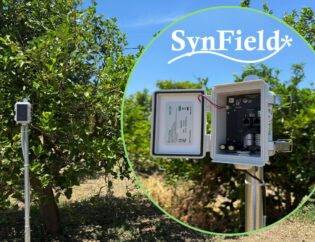
Through our integrated SynField solution, we provide a technically documented approach that can be adapted to the specific requirements of each agricultural holding.
Soil and Crop Monitoring
Monitoring soil moisture at different locations or depths can help farmers better understand the amount of water available within the crop’s root zone and how soil moisture changes following each irrigation event.
Irrigation Network Monitoring
Data collected from the irrigation network can be used to monitor parameters such as pressure and water consumption, providing a clearer picture of how the irrigation infrastructure is actually operating.
Water Quality Monitoring
Through the SynWater water-quality subsystem, measurements of critical water-quality parameters can be integrated according to the requirements of each application.
Irrigation Automation
Data collection becomes even more valuable when it is connected to decision-making and irrigation control.
Using suitable automation equipment, such as electrically controlled irrigation valves, the system can connect field data with the operation of the irrigation infrastructure, creating the conditions for more targeted and efficient water management.
Planning an Investment in Precision Irrigation?
The SYNELIXIS team can support you in the technical design of an integrated SynField solution, tailored to the needs of your crops and irrigation network.
Contact us to discuss your use case
Cutting-Edge Technology in Livestock Production – Smart Livestock Farming
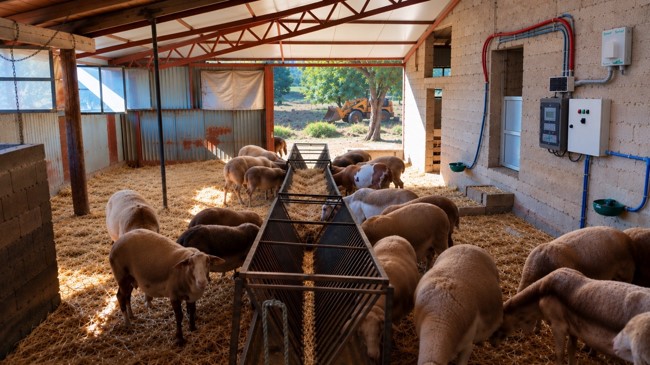
The opportunities for adopting modern technologies under the new Farm Improvement Plans also extend to livestock production.
More specifically, Annex 8 – “Cutting-edge Technology in Livestock Production” includes expenditure categories that contribute to evaluation criterion 6, including automated environmental control systems for temperature, humidity and air quality.
An integrated environmental control system can combine the systematic collection of data from livestock facilities, processing of measurements and automated control of appropriate equipment, with the aim of adapting environmental conditions to the needs of the animals.
Monitoring Environmental Conditions in Livestock Facilities
Through the SynAir air-quality subsystem, SYNELIXIS can support the continuous monitoring of critical environmental parameters inside livestock facilities, including:
- temperature,
- relative humidity,
- carbon monoxide (CO),
- carbon dioxide (CO₂),
- ammonia (NH₃),
- methane (CH₄),
- particulate matter (PM1 / PM2.5 / PM4 / PM10).
Continuous monitoring provides a real and measurable picture of conditions inside the livestock facility, enabling farmers to monitor both air quality and the microclimate of animal housing areas.
From Monitoring to Automated Environmental Control
The true value of data becomes apparent when it is used for the automatic control of equipment within the livestock facility.
By integrating appropriate automation systems, real-time measurements from SynAir can serve as inputs to an integrated environmental control system. Equipment can then be activated or adjusted according to predefined parameters and the specific requirements of the livestock operation.
This creates an integrated Smart Livestock Farming approach in which technology goes beyond simple monitoring and supports the transition from data to decisions and, ultimately, automation.
Planning to Modernise a Livestock Facility?
Talk to the SYNELIXIS team to explore how SynAir can be used for environmental monitoring and as part of an integrated automation system for your livestock facility.
Contact us to discuss your use case.
What Funding Rates Are Available?;
Funding rates are not uniform across all investments.
The level of support depends on factors such as the category of eligible expenditure, the beneficiary’s status and the geographical area in which the investment is implemented.
The call also provides for increased support rates in certain cases, including young farmers, certain categories of farmers up to the age of 40, and investments implemented in specific geographical areas.
For this reason, the final support rate should be calculated for each individual investment plan and expenditure category, rather than assuming a single funding percentage applies to the entire call.
When Can Applications Be Submitted?
Applications are submitted electronically through OPSKE (Integrated State Aid Information System).
📅 Applications open: 6 October 2026
📅 Applications deadline: 20 January 2027
Only one application per Greek Tax Identification Number (TIN) may be submitted, and the application must be electronically finalised by the relevant deadline.
Applications submitted after the deadline will not be accepted. Applications must also be complete and include all required supporting documentation.
Start Preparing Your Investment Plan Early
Whether you are planning an investment in Precision Irrigation and water saving or the digital modernisation of a livestock facility, proper technical preparation is an essential step in developing a well-structured investment plan.
Through SynField, SynWater and SynAir, SYNELIXIS can support farmers, livestock producers, agronomists and consultants in designing integrated monitoring, management and automation solutions.
The eligibility, evaluation score and funding rate of each investment are determined by the terms and conditions of the Call and by the assessment of the individual investment plan.